

When parents worry about family photos, it’s usually not the outfits or the location that feel heavy.
It’s the kids.
Will they listen?
Will they sit still?
Will they cooperate long enough to get something usable?
Those concerns usually show up before the session even begins. Parents arrive a little tense, already bracing for how things might go.
What parents usually worry will happen
Most parents imagine a worst-case scenario.
A child who won’t stay close.
A meltdown that derails everything.
A session spent apologizing instead of enjoying the moment.
They worry that behavior will decide whether the photos are “successful,” and that if their child doesn’t perform a certain way, the session has failed before it’s really started.
What actually happens instead
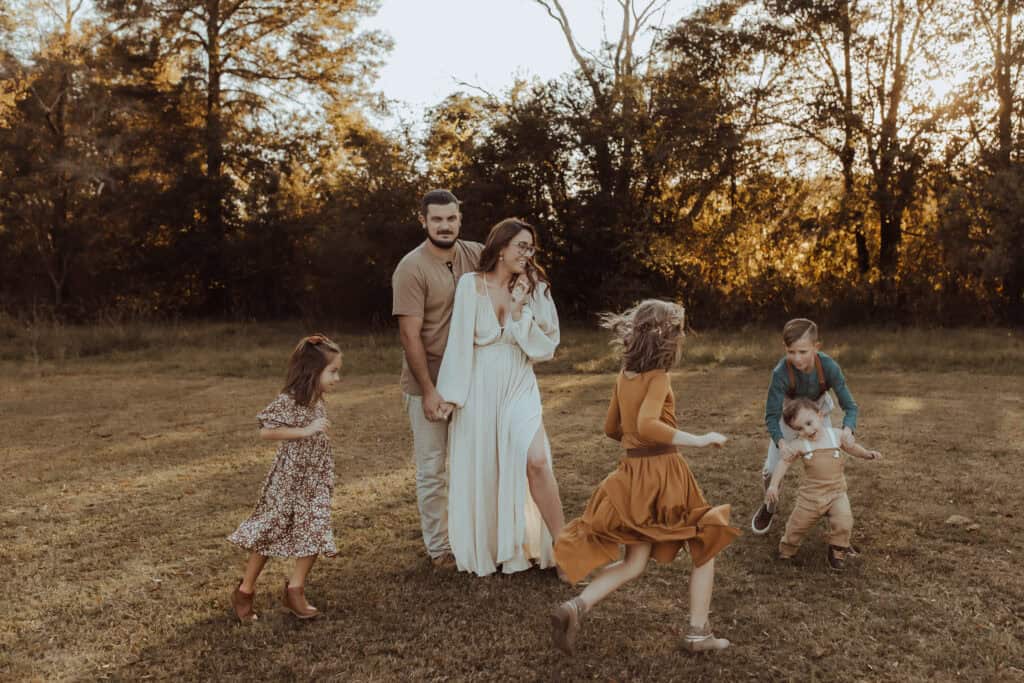
In real sessions, things unfold much more quietly.
Kids test the space. They move ahead, fall behind, stop to look at something that matters to them. Sometimes they cling. Sometimes they wander. Sometimes they’re loud. Sometimes they’re reserved.
None of that stops the session. It simply shapes it.
I adjust. I slow down. I follow what’s working instead of forcing what isn’t.
There’s no moment where everything falls apart because a child didn’t behave the way they were “supposed” to.

How kids respond when they’re not being managed
When kids aren’t constantly corrected or redirected for the sake of photos, something shifts.
They soften.
They get curious.
They come back on their own terms.
They don’t need to be told where to stand or how to smile. They just need space to exist without pressure. When that happens, connection shows up naturally, without being asked for.
What parents are usually doing in these moments
At first, parents try to help.
They apologize.
They prompt.
They try to fix what they think isn’t working.
Most of the time, they’re doing this out of care, not control. They want the session to go well. They want to do their part.
Eventually, they realize they don’t need to manage everything. That the session isn’t fragile. That nothing is breaking because their child is being themselves.
That’s usually when shoulders drop and the moment starts to feel more settled.

What changes when parents stop apologizing
Once parents stop apologizing for their kids, the energy shifts.
They start paying attention to their children instead of the camera. They respond instead of react. They settle into the moment instead of trying to steer it.
Kids feel that difference immediately. They move closer. They engage more. The dynamic becomes less about behavior and more about connection.
That’s where the session finds its rhythm.
Why “behavior” isn’t what determines good photos
Good family photos aren’t built on perfect behavior.
They’re built on trust. On presence. On giving families room to show up as they are without feeling like they need to perform.
As a family photographer in Warner Robins, this is what I’ve seen over and over again. Sessions don’t succeed because kids behave. They succeed because families are given room for real emotions, natural family dynamics, and connection without fear of getting it wrong.

Questions Parents Ask When Kids Don’t Cooperate
What if my child refuses to participate?
That happens sometimes. Participation doesn’t always look like smiling at the camera or standing where they’re told. It can look like staying close, wandering nearby, or quietly observing. All of that still tells part of your family’s story.
Should I discipline or correct my child during the session?
You don’t need to handle things differently than you normally would, but you also don’t need to manage every moment for the sake of photos. I guide the flow so you can stay connected instead of focused on behavior.
Will this still result in photos I want to hang in my home?
Yes. Good photos aren’t created by perfect behavior. They’re created through presence, connection, and the space to let moments unfold naturally.
What if my child is shy or won’t warm up?
Some kids take longer to settle in, and that’s okay. Sessions are paced to allow for that, without pressure or rushing.
Do these kinds of sessions really work for all families?
They work best for families who are open to flexibility and understand that family dynamics don’t always follow a plan. If that feels supportive rather than stressful, this approach tends to be a good fit.
x